
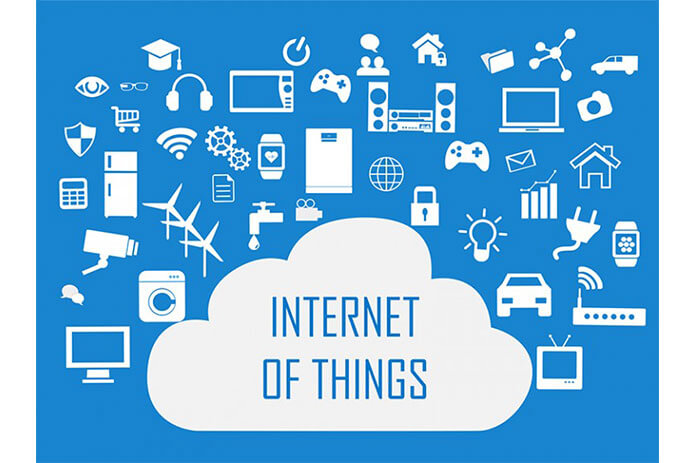
An article in Forbes inspired this top 5 list. The article reported on Gartner predictions for Internet-of-Things (IoT) technologies for 2017 and 2018. The five that intersect IT and are extensions of data sources with which Blazent interacts are:
- IoT Security– Enterprises clearly must begin to invest more heavily in developing the expertise to address security problems that are often the result of poor design, implementation or lack of training. IoT technologies can provide accurate locations for mobile IT assets, which can be used to detect if, for example, laptops or any device with an IP address containing valuable information are taken off-site. Sensors on IT devices can identify the lack of secure networking, and restrict access.
- IoT Analytics– The results of a survey conducted by 451 Group on data quality which Blazent sponsored indicated that asset management will be the primary use case for implementation of machine-learning applications. IoT analytics will require entirely new algorithms, architectures, data structures and approaches to machine learning if organizations are to realize the full value of the data captured across a rapidly expanding range of devices being monitored.
- IoT Device Management– The challenges of enabling technologies that are context-, location- and state-aware are not trivial. IoT Device Management will use data structures capable of learning and flexing to unique inbound data. This flexibility opens the door to gaining new insights about the business that are not available today.
- Low-Power, Short-Range IoT Networks– New classes of networked end points that use low-power, short-range wireless IoT connectivity will far outnumber connections using wide-area IoT networks. These smart devices will number orders of magnitude greater than the assets IT tracks today, which will push the boundaries of the IT management tools currently in use.
- Event-Stream Processing– Gartner predicts that some IoT applications will generate extremely high data rates that will require real-time analysis. Systems creating tens of thousands of events per second are already common, and millions of events per second can occur in some telecom and telemetry situations. To address such requirements, distributed stream computing platforms (DSCPs) have emerged.
IT organizations must increasingly understand and respond to real-time business challenges. Blazent’s data quality solutions are already providing reliable data about infrastructure hardware and software to support IT operations and service delivery for some of the largest enterprises in the world. As IoT devices proliferate, automated approaches must evolve to handle the explosion of management data that will be generated. Blazent’s data quality platform enables organizations to automatically reconcile multiple data streams using powerful data management technologies. You can learn more about our solution here.